

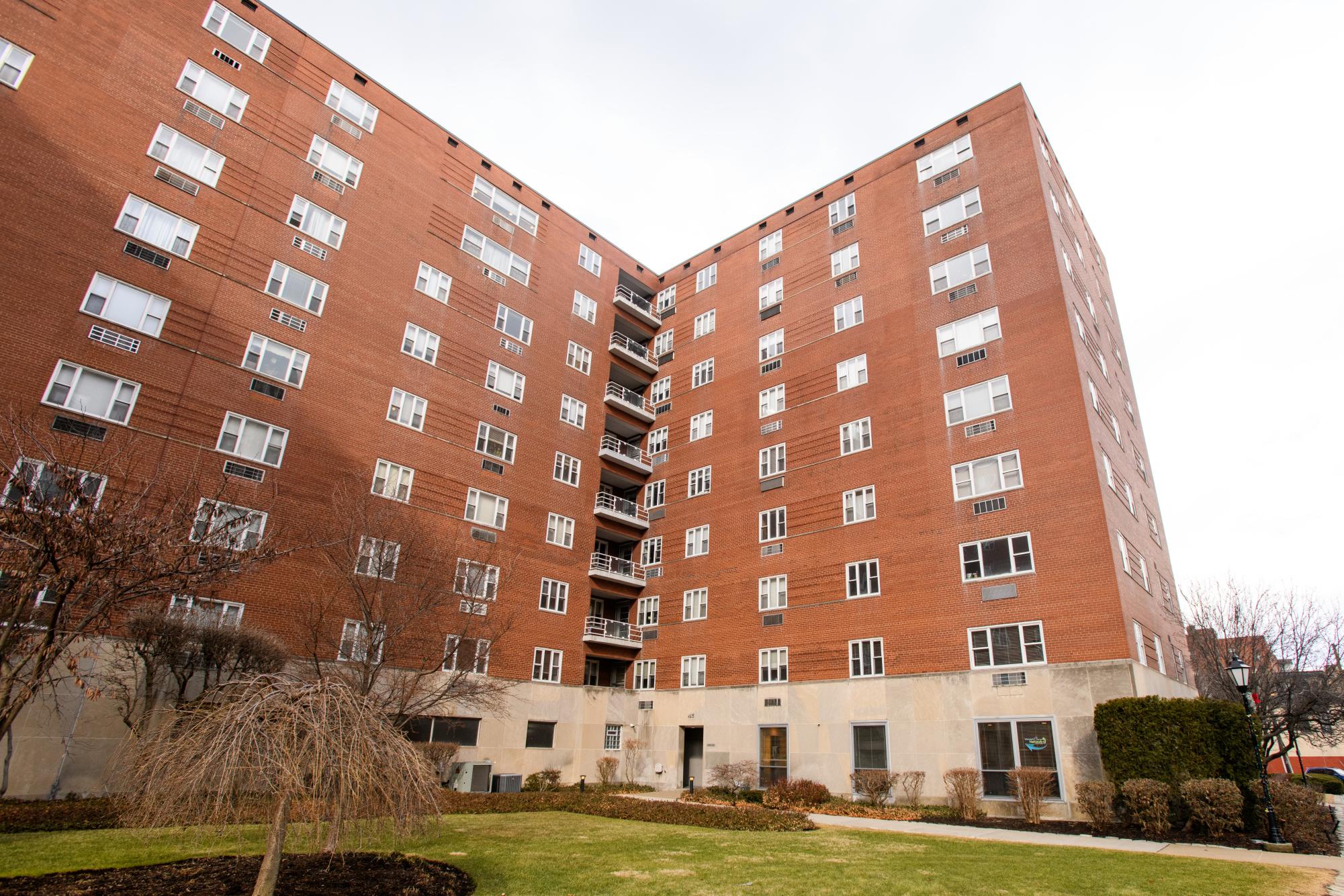

In October of 2024, Maddie was searching the internet in a panic. She needed an HPV test, and as an out-of-state student, Maddie’s insurance wouldn’t cover a test at a hospital like UPMC. Scrolling online, she found Women’s Choice Network, a crisis pregnancy center in North Oakland.
Her appointment felt normal at first — she filled out forms, chatted with the friendly desk staff and gave a urine sample for her test. Maddie, a Pitt student granted partial anonymity for medical privacy, was then taken to an exam room, where she noticed the red flags.
When Maddie sat down, a staff member handed her religious and abstinence-related pamphlets featuring “women who have seen the light.” A woman in a white coat came in after and made comments Maddie felt were inappropriate for a doctor. After numerous questions about her sexual history, she was told, “our bodies are sacred,” “it’s best to wait until marriage” and that Maddie “had a wild history.”
Knowing something was wrong, Maddie asked who they were. The woman said they were a “private organization,” which is why they could discuss topics like religion and ask personal questions. Feeling “slut-shamed,” Maddie left the center in distress.
With only two medically sanctioned abortion clinics in Southwestern Pennsylvania, crisis pregnancy centers can affect access to abortion care and sexual health care for students and women like Maddie by operating without medical regulatory oversight.
What are crisis pregnancy centers?
Crisis pregnancy centers are anti-abortion organizations that aim to prevent customers from accessing abortion, contraception and comprehensive sex education. They provide services such as pregnancy testing, consulting, free family goods such as strollers and diapers, and non diagnostic ultrasounds — which are used for keepsake entertainment and cannot provide a medical diagnosis of fetal health.
However, despite positioning themselves as a medical facility, they are generally not medical facilities and employ few to no licensed clinicians, frequently provide false or misleading health care information, and importantly, are unregulated by medical or ethical practice laws — permitting them to operate within a “regulatory dead zone.” Many are staffed entirely by volunteers and misrepresent nonmedical staff as clinicians by wearing white coats and performing ultrasounds.
Amy Scheuring, executive director of Women’s Choice Network, said its programs are led by four board-certified physicians and that each center employs registered nurses and licensed sonographers. When asked about what medical oversight or regulations govern its operations, Scheuring said the organization is “required to maintain CLIA waivers at all three clinics and to adhere to DOH and OSHA standards.”
CLIA waivers are certificates allowing facilities to perform low-risk tests such as urine pregnancy or STI tests, and regulates test quality, not patient care. Women’s Choice Network did not explicitly state whether its centers are licensed medical facilities.
One in four women will have an abortion in their lifetime, with 13% of women in the U.S. having one before the age of 25. In 2022, more than half of abortion patients in 2022 were women in their 20s.
When asked to respond to criticisms that crisis pregnancy centers may mislead clients looking for abortion care away from their choice, Scheuring said every woman deserves “authentic health care” and “informed consent,” and criticized the use of abortion pills as health care.
“Abortion pills further separate her from authentic health care. We see many women after abortion to assess her health and any adverse effects,” Scheuring said.
In September 2024, Women’s Choice Network and Choose Life at Pitt, a pro-life club on campus, did a joint tabling event in front of the William Pitt Union.
Marin Catino, former president of Planned Parenthood Generation Action, a campus club that raises awareness about reproductive rights, said the organizations were handing out bags of goodies to students passing by with contact information included.
“I got a frog stress ball from [the event], and it said, ‘If you kissed the wrong frog call …’ and then it was their number,” Catino said.
Kyra Kishore, president of Choose Life at Pitt, said a main component of CPC services is “informed consent.”
“They do not offer abortions, but they will talk them through all the kinds of abortion procedures that exist and the risks,” Kishore said. “I think that’s something that we don’t see as much with places like Planned Parenthood, where they won’t talk to them about the risks, and that’s really important, especially because the health of both the mommy and the baby matter.”
Catino said she believes Women’s Choice Network is targeting students partially through visibility.
“For the most part, being an advocate is just being present with resources for students. This is exactly their tactic,” Catino said. “By being present outside of the WPU, at the activities fair, or even having their posters in the news boxes along Fifth [Avenue], Women’s Choice Network is able to be recognized as a reproductive clinic and resource for students.”
According to Women’s Law Project, a Pennsylvania nonprofit women’s and LGBTQ+ rights legal organization, CPCs outnumber legitimate abortion providers nine to one in the majority of Pennsylvania counties, the third highest nationwide ratio of centers. There are approximately 156 CPCs operating within the state — two in the immediate Oakland neighborhood and nine in the greater Pittsburgh area, compared to the two medically licensed abortion providers in Southwestern Pennsylvania.
More than 752,000 Pennsylvania women live in contraceptive deserts, which are “counties that lack reasonable access to the full range of [contraceptive] methods.” Over 34,000 women live in counties with no centers that provide the full range of contraceptive and abortion methods.
Some centers will position themselves directly next to abortion providers to redirect patients to a free option — for example, East Liberty Women’s Care Center, a crisis pregnancy center in East Liberty, is located one block away from Allegheny Reproductive Health Center — one of the two abortion providers in SWPA excluding UPMC Magee-Womens Hospital.
The two crisis pregnancy centers in the Oakland area, Women’s Choice Network Oakland and Birthright of Pittsburgh, are located in North Oakland, an area populated by hundreds of students away from home, many with medical autonomy for the first time.
Michael Gibson, communications director at Planned Parenthood of Western Pennsylvania, said he believes rural students, whose primary community center may have been religious, could be targeted by religious rhetoric used by CPCs.
“If [rural students are] in an emotional situation and you’re getting direct outreach from an organization that’s using familiar language … you’re going to fall back on some of that familiarity and they’re going to take advantage of that trust,” Gibson said.
Pitt is unusual in that there is a relatively high percentage of rural students — 16.2% of the fall 2024 undergraduate class are from rural Pennsylvania.
When she visited Women’s Choice Network, Maddie said she knew it wasn’t a real health clinic when the woman who talked to her “mentioned God several times” throughout her visit.
When asked to respond to concerns regarding clients receiving religious or moral counseling during CPC visits, Scheuring emphasized the quality of their care.
“While we are a faith-based organization, our commitment to exceptional health care guides our practice,” Scheuring said. “We serve with integrity, respect and excellence.”
Many of the services advertised by CPCs are also free, appealing to students and low-income individuals. In the Pittsburgh area, CPCs are located in Oakland, East Liberty, Southside, Northside, Downtown, Bellevue, Coraopolis and Monroeville — all neighborhoods with below-average median household income.
What do they offer?
A study conducted by The Alliance, a women’s rights and gender equality advocacy organization, found the most common services offered by CPCs in Pennsylvania are pregnancy testing (88.5%) and counseling (82.1%). Ninety-eight point seven percent of CPCs were found to provide no prenatal care, and 87.2% provide no referrals. None provide contraception or abortions.
Kishore said providing abortion services would go against the message of crisis pregnancy centers.
“The overarching point of these crisis pregnancy centers [is] that they want to fully support women, and that abortion is not fully supporting women is kind of the belief and message,” Kishore said.
The Alliance study also found almost 65% of CPCs in the state made false and biased medical claims, including advocacy for the abortion reversal pill. In Pennsylvania, 41% of CPCs promote the abortion reversal pill on their website, Women’s Choice Network and East Liberty Women’s Care Center included.
The abortion reversal pill is an experimental drug that contains a high dose of progesterone intended to be taken after the first dose of mifepristone — the first of two drugs typically used in medication abortion, which is meant to stop the pregnancy growth by blocking progesterone. The American College of Obstetricians and Gynecologists has called medication abortion reversal “unproven and unethical.” The only clinical study that investigated the efficacy of high dose progesterone to counteract mifepristone was stopped early after enrolling only 12 patients because of safety concerns. Severe hemorrhage occurred in three patients, requiring emergency medical care.
Despite the public criticisms of the method, Scheuring said she believes the abortion reversal pill gives women reproductive freedom.
“We believe a woman’s reproductive choice should not end because she took a pill,” Scheuring said. “Many women take mifepristone and have immediate regrets. They deserve to have a choice.”
Scheuring added that she believes the abortion reversal pill is a safe treatment.
“Prescribing progesterone is a simple safe option and is the most prescribed medication for pregnant women and has been safely used since the 1950s,” Scheuring said. “While ‘reversal’ is a simplified term, we rely on the science and follow a protocol that has been helpful to thousands of women.”
When asked about crisis pregnancy centers’ promotion of the abortion reversal pill, Kishore said any medical procedure is inherently risky.
“There are risks to everything in the end, to every single thing in our medical world,” Kishore said.
How are they funded?
Crisis pregnancy centers often provide most — if not all — of their services for free, unlike legal abortion providers and licensed medical clinics. Without federal or state funding, crisis pregnancy centers’ profit margin remains virtually unknown.
Pennsylvania previously allocated funding to crisis pregnancy centers through Real Alternatives, an organization that partners with crisis pregnancy centers to “provide life-affirming pregnancy and parenting support services,” through a program established by former Gov. Bob Casey Sr. CPCs received over $30 million in funds according to state records from 2012 to 2017 to underwrite operations through this contract. In 2024, Gov. Josh Shapiro ended the Commonwealth’s contract with Real Alternatives and prohibited state funds from being given to CPCs.
Scheuring said Women’s Choice Network operates on financial support from “private local supporters and occasional private grantmakers.”
Crisis pregnancy centers operate under large international parent networks that help fund their operations. As of 2007, two network organizations account for two thirds of all CPCs in America — Heartbeat International and Care Net. Heartbeat International is the largest network, with 1,800 affiliates in the U.S. Scheuring said Women’s Choice Network does not receive funding from any parent organization.
Gibson, who works for Planned Parenthood, said he believes crisis pregnancy centers under parent networks like Heartbeat are generating funding through selling personal health information and creating profitable profiles for unauthorized data mining through collecting sensitive information such as healthcare insurance and medical data.
“If you’re seeing somebody for free … where’s your profit margin come from?” Gibson said. “I think when you start picking at that, [that] is where the insidiousness of CPCs becomes obvious to people. The biggest money maker for most organizations like this is on data. If the service is free, you’re the product.”
Because crisis pregnancy centers are primarily not medical institutions, they are not a covered entity under federal privacy laws, like HIPAA, or medical and ethical practice laws, leaving voluntarily inputted customer data privy to proprietary privacy policies.
Scheuring said Women’s Choice Network does not accept any form of payment for their services, including insurance or third party billing, and does not share client information except at client request.
Where can I go?
Pittsburgh residents seeking reproductive health care have a variety of options.
Planned Parenthood of Western Pennsylvania and Allegheny Reproductive Health Center are the two abortion clinics in the Pittsburgh area. In addition to medical and surgical abortion, both offer a variety of contraceptive, reproductive and gynecological services. UPMC Magee Women’s Hospital also provides general contraceptive, reproductive and gynecological care.
Students at Pitt can access some reproductive health resources, services and referrals through Student Health Services.
Planned Parenthood of Western Pennsylvania
933 Liberty Avenue, Pittsburgh, PA 15222
(412) 434-8957
Allegheny Reproductive Health Center
5910 Kirkwood Street, Pittsburgh, PA 15206
(412) 661-8811
300 Halket Street, Suite 610, Pittsburgh, PA 15213
(412) 641-5451
119 University Place, Pittsburgh, PA 15260
(412) 383-1800