

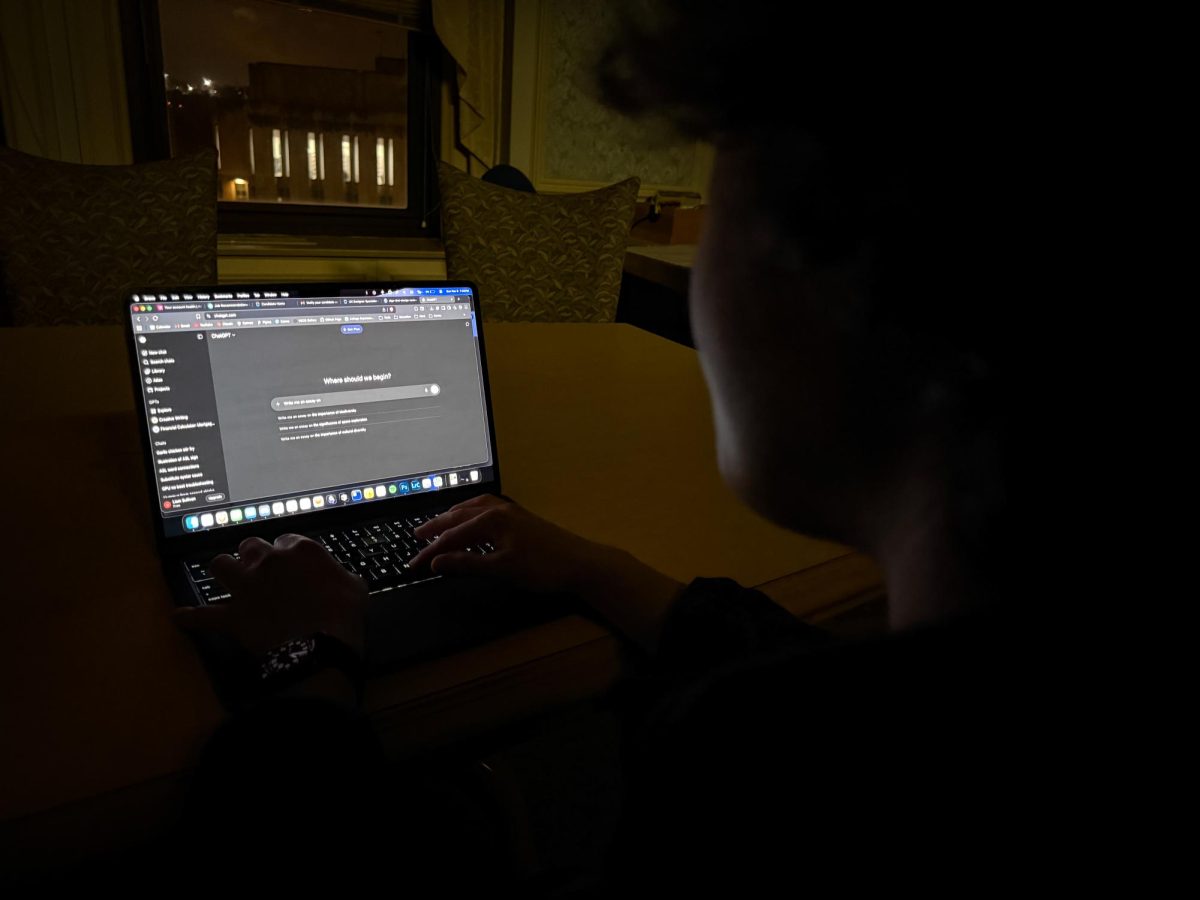
During the current rise of artificial intelligence, we continue to witness its rapid growth in skill and capability. However, as AI becomes more prominent, traditional forms of writing — especially creative and academic writing — seem to be disappearing. Many college students today turn to AI to complete their writing assignments, relying on it as more than just an editing tool.
As someone who values creativity and the art of writing, I find this troubling. AI can easily generate essays, poems and even creative stories in seconds, but that convenience comes at a cost — it can increase laziness. When students depend on AI to write their papers, they miss the opportunity to develop their own voices, ideas and craftsmanship. Writing is not just about putting words on a page — it’s about expressing thoughts and emotion. As someone who loves having a prominent voice and reading other pieces with a prominent voice, it feels kind of diminishing.
I believe ChatGPT and similar tools should include certain limitations to prevent users from relying too heavily on AI to do all the work for them. Using AI as a tool for brainstorming or to clarify something is perfectly fine. However, using it to write an entire assignment defeats the purpose of learning. For example, if someone asks AI to write their assignment — maybe a three-page paper on the color yellow — they’re not developing their skills. This dependence on AI can prevent people from learning how to write effectively — a skill that remains essential no matter your field.
Even outside the classroom, writing plays an important role in communication. Whether it’s crafting an email, writing a cover letter or sending a text message, the ability to write well is crucial. I’ve heard of students using AI to write emails to their professors — something that not only ruins the student’s authenticity but also weakens everyday communication skills.
The impact of AI extends beyond academia. As AI-generated content becomes more common, creative fields like journalism and storytelling face similar challenges. If a creative writing student lets AI do the work, the “creative” part of creative writing is lost. True creativity comes from human imagination, something AI should never be able to replicate.
As AI continues to advance, we must find ways to preserve the integrity of writing. We need systems and standards that encourage genuine effort and self-expression rather than complete dependence on technology. Writing is a powerful outlet, a way to share one’s voice and connect with others. When that voice is replaced by AI, something deeply meaningful is lost. If we’re not careful, AI may consume more of us than we consume of it.
Writing has always been a light at the end of the tunnel for me, a space for reflection and creativity. I hope we can find ways to protect that light and keep the power of writing in human hands.
Angel Rodriguez loves a writing style with a prominent voice and is very passionate about equality, self-expression and what matters most. He is always willing to hear feedback and new ideas at [email protected]