

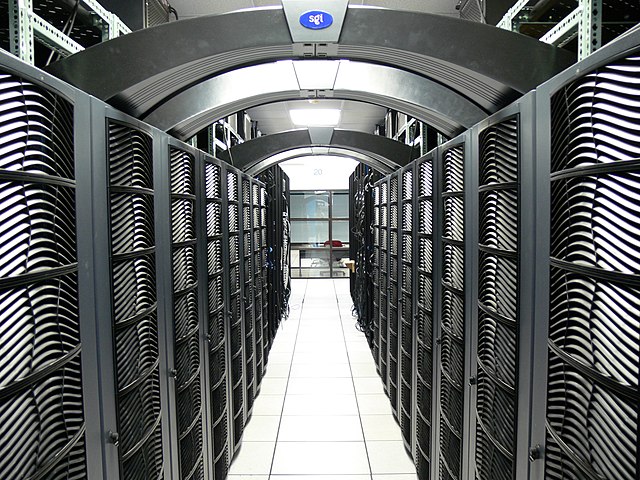
A controversial hyperscale data center proposed in Allegheny County recently cleared the approval process, moving it toward the construction phase.
On Dec. 16, Springdale Borough Council members voted to approve a conditional use permit for a new hyperscale data center. Planned to be built at the site of a former coal-fired power plant, the data center will be 565,000 square feet and could demand as much power as over 140,000 homes.
Springdale residents voiced concerns about the center, including loud noise and the environmental implications of its size and energy demand. Hyperscale centers are becoming increasingly prevalent worldwide — in tandem with the elevated usage of artificial intelligence — and Pennsylvania has become a hotspot for them.
After meeting with Springdale residents, Lauren Posey, environmental policy advocate for Protect PT, said the community was very concerned and “uniformly” against the data center’s approval. Environmental groups and residents gathered several times to express concerns about potential air quality and health impacts that may affect Springdale and surrounding communities.
“Protect PT wanted the vote to reflect the will of the Springdale people,” Posey said. “Residents consistently showed up at municipal hearings and offered comments about being outright opposed or deeply concerned about negative impacts, with a focal point being how resource-intensive these centers are.”
Posey said stakeholders and legislators in local hearings, fearing scaring off industrial development, prefer to avoid overregulation rather than protect their residents and the natural environment.
“While not all legislators take this perspective, many of our leaders are welcoming it as these [data centers] continue to be approved,” Posey said.
Terry Carcella, Springdale Borough manager, said the new data center will be a “great thing” for Springdale and Allegheny County because it will create jobs and bring economic growth into the community. Carcella noted that while residents expressed concern, the borough had no legal standing to reject the proposal without proof of harm.
“It would be really difficult for the council, legally, to say ‘we have to say no to the data center because it affects safety and welfare of the community’ when, in fact, there was no evidence or documentation brought forth saying it was going to impact our current regulations,” Carcella said. “There was no reasonable way to say no to this project, based on what [the developers] presented as evidence.”
Carcella said the data center will create more jobs in a state where they are needed, even if it doesn’t replicate the thousands of jobs created by the coal industry. According to Carcella, data centers are going to be built one way or another.
“These data centers will happen regardless,” Carcella said. “They are going to be built somewhere, and this location in Springdale was a valuable site for the developer to look at and identify as a great location to build this.”
Carcella highlighted the design details of the approved Springdale location.
“There are many new and positive components in the case of the Springdale center we approved, including water usage, which will consist of a closed-loop system that does not necessitate using a lot more water,” Carcella said.
Talor Musil, field manager of the Environmental Health Project, said the council’s approval of the data center raises concerns from both a public health and environmental perspective, particularly due to the backup generators that contribute to air pollution.
“The largest environmental concern is the backup diesel generators, which will need to be used when there’s a stress point on the electric grid,” Musil said. “When these are in use, they can cause harmful emissions that will impact both Springdale and neighboring communities.”
Musil said the EHP is pushing for an investigation into the local and regional impacts of the center. Musil said assessing negative environmental impacts, like rising greenhouse gas levels, is “not always part of the process with [data centers].”
“Understanding the impacts of greenhouse gases and how they contribute to regional pollution is necessary, particularly with large-scale centers like this one,” Musil said.
According to Musil, data centers should be thought of as larger lifecycles of infrastructure that are connected to fossil fuel use and energy production, not as isolated projects.
“Data centers of this scale lead to the encouragement of more oil and gas extraction, which could lead to more fracking wells and pipelines to meet the increased electricity demand,” Musil said. “This would be a serious concern, and understanding these risks before moving forward with a project is very important.”
According to Posey, hyperscale data centers — such as the Springdale center — can use as much energy as a small city. Posey said while data centers do provide essential services for daily life, like storing data, there is a huge difference between smaller centers and the new wave of hyperscale centers that are multiplying due to artificial intelligence.
“Hyperscale data centers are vast and power-hungry. They require much more energy and equipment,” Posey said. “Everyone wants a piece of the [AI race], so developers have begun building data centers before even having a client and wait to land one.”