

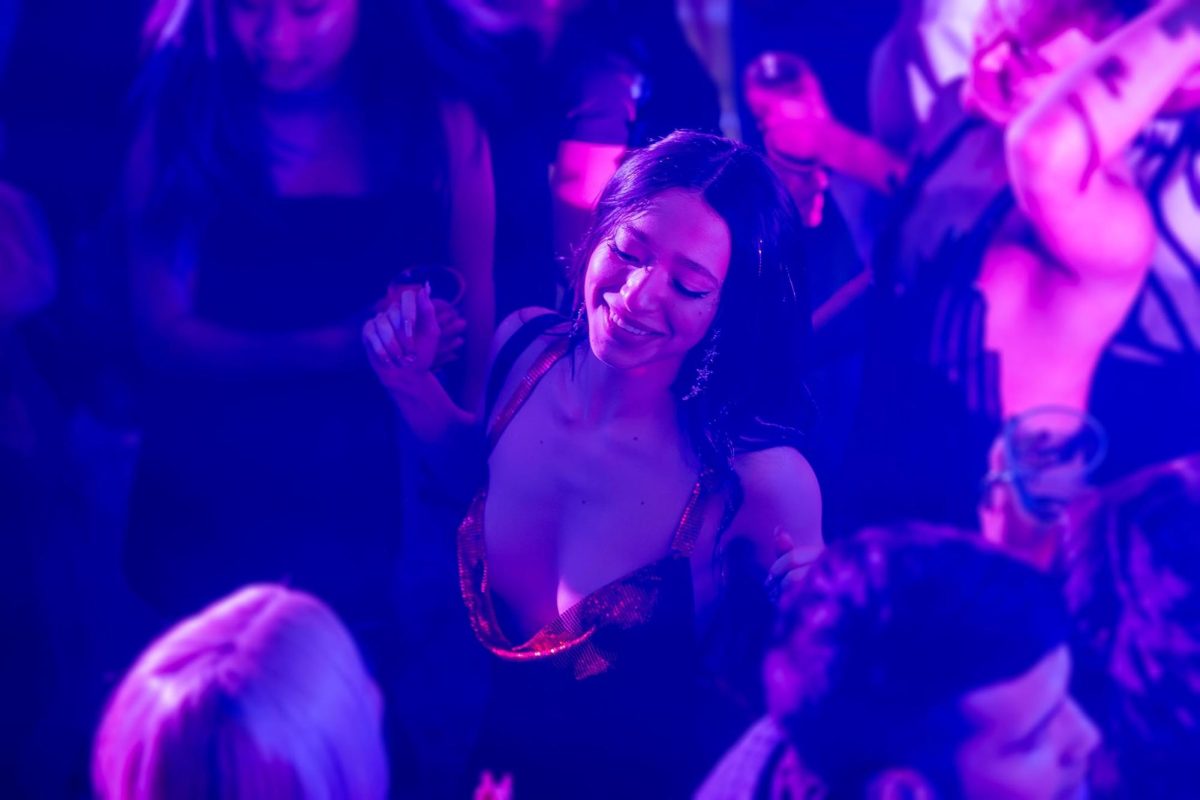
Sex has made its shift from the bedroom and onto the big screen. Erotic cinema explores sexuality and desires — excusing the usual censorship of sex in films — and makes something often uncomfortable appealing. However, that was not always the case.
In the early 20th century, erotic films were known as “stage-films,” and from the start, they were not accepted by the public. They were seen as immoral and never fully integrated into the larger scope of the film industry. This led to the introduction of censorship boards, placing restrictions on what could be shown to whom.
In the late 20th century, during the sexual liberation movement, the attitude surrounding these films changed. They began to be viewed as more of a “cultural phenomenon,” showing the shift towards a period less intent on sexual regression and the initiation of open conversations about sex. This movement opened up the film industry for the inclusion of preexisting and up-and-coming erotic films.
More recently, there has been a noticeable increase in the release of films incorporating eroticism and sexual content. One example of this is “Anora.” The film won five major awards despite its explicitly detailed story of a young sex worker, showing the shift into society’s general acceptance of eroticism in films.
Eden Augustine Mann, a junior and BPhil candidate in film and media studies, said she first found her interest in the idea of eroticism at age 18. Mann said growing up, she was strongly discouraged from expressing any part of her sexuality. As she transitioned into womanhood, Mann said a defining moment was when she began coming to terms with her own eroticism, despite previous notions that sexuality and eroticism were something negative.
“As I’ve gotten older and moved into my 20s, I’ve really come to terms with the fact that sexuality is something that should be celebrated. And I think eroticism is so beautiful because it allows us as people to love ourselves. I think what provoked me most about eroticism was that it’s like a life force like God — it’s infused in all of us,” Mann said.
Mann said one of her favorite erotic films is “Portrait of Lady on Fire.” The French film was released in 2019, directed by Céline Sciamma, and portrays a same-sex romance, making it a significant film in queer media.
“I think that this film is so beautiful, and it’s such a gentle film. I think it puts into perspective how the creative process, creativity and sexual pursuit are the same energy and the similarity of those wavelengths,” Mann said.
Producing her own versions of erotic media felt self-preserving, Mann said. She noticed that some erotic films were produced as exploitation of actors in the film industry. However, she said she wanted to reshape that preexisting idea in what came before into something that was more of a celebration of the body.
“Obviously, there’s a lot of ways that people exploit those who star in erotic genre films. But yeah, I think this whole idea that we can reclaim our own bodies is definitely what sparked my interest,” Mann said.
Megan Barron, a sophomore and film and media studies major, said she took an interest in the erotic genre after learning about the complexity and public perception of these films.
“I took an American censorship in film course, and we talked about the Motion Picture Association and the censorship they placed on certain films. I also took a queer film course where we saw films that were very involved with the expression of the body and how those were censored and received by the public,” Barron said. “I think seeing how that has changed in the past 100 years is what really got me into the erotic genre.”
Katie Warczak, a visiting lecturer in the English Department, said discussions around sex in the early 20th century were generally viewed to be very taboo — even mentions of sex and sexuality that were incorporated into literature and film were not generally accepted. This may have had to do with the influence of Puritan views, as standards at the time around purity were greatly influential.
“Historically, I think discussions about sex and sexuality for both men and women were similar, but certainly with religious influences, and other discourses. Work in the 19th century involv[ing] gender shows sex as much more taboo, especially for women,” Warczak said.
Barron said she noticed many erotic films released in the 20th century were more underground and not shown as frequently in theaters. She said this might have been largely influenced by the censorship of sexual films and the taboo label of the topic. Barron noticed that more recently, that perspective is changing, and erotic films are becoming more accessible in theaters and incorporated more into mainstream media.
“I think about where we are going with erotic film and how sexual content and eroticism has become kind of mainstream. I feel like eroticism was very underground and taboo, something very tongue in cheek, and it just wasn’t really discussed. But now, media like “Heated Rivalry” and “Poor Things” have changed that. Even this year, there’s a lot of sexual content in best picture nominees like “Marty Supreme,” so I’m interested in how that content is becoming mainstream and how it will continue to progress,” Barron said.
Warczak said there has been recent development in the film industry with more sexually liberating films coming out. Additionally, the incorporation of minority voices and the portrayal of every aspect of sexuality has made erotic films even more accepting and desired.
“A lot of media representation recently has been useful with members of the LGBTQIA+ [community] coming out and sharing their stories in mainstream media, which shows we are having an increase in diversity and representation,” Warczak said.
Mann said the most notable difference in the industry of erotic films is visibility and the growing acceptance in mainstream media.
“I can certainly tell you that the accessibility to eroticism has certainly become more vast, and I think as a genre, it has definitely expanded into something more universal and an accessible realm of media … It’s no longer exclusively taboo,” Mann said.
Warczak said sexual films are much easier to access now, possibly influencing the wider acceptance of this genre of films.
“I think there is more representation and more options to access sex in media representation now, whether that’s TV or literature, and more work pertaining to specific individuals: fantasy romance, cis[-gender], non-binary — pretty much any sexuality out there, which is definitely a positive,” Warczak said.
Barron noted a few specific studios that may be influencing this shift towards erotic media becoming more mainstream and how these directors are changing and influencing the film industry.
“I think more erotic films are coming out, especially [from] independent studios like A24 and Neon who pick up a lot of creators that make a lot more interpretive and experimental films that have much more eroticism than some movies from the early 2000s, and shifting to this era of sexual content and eroticism,” Barron said.