

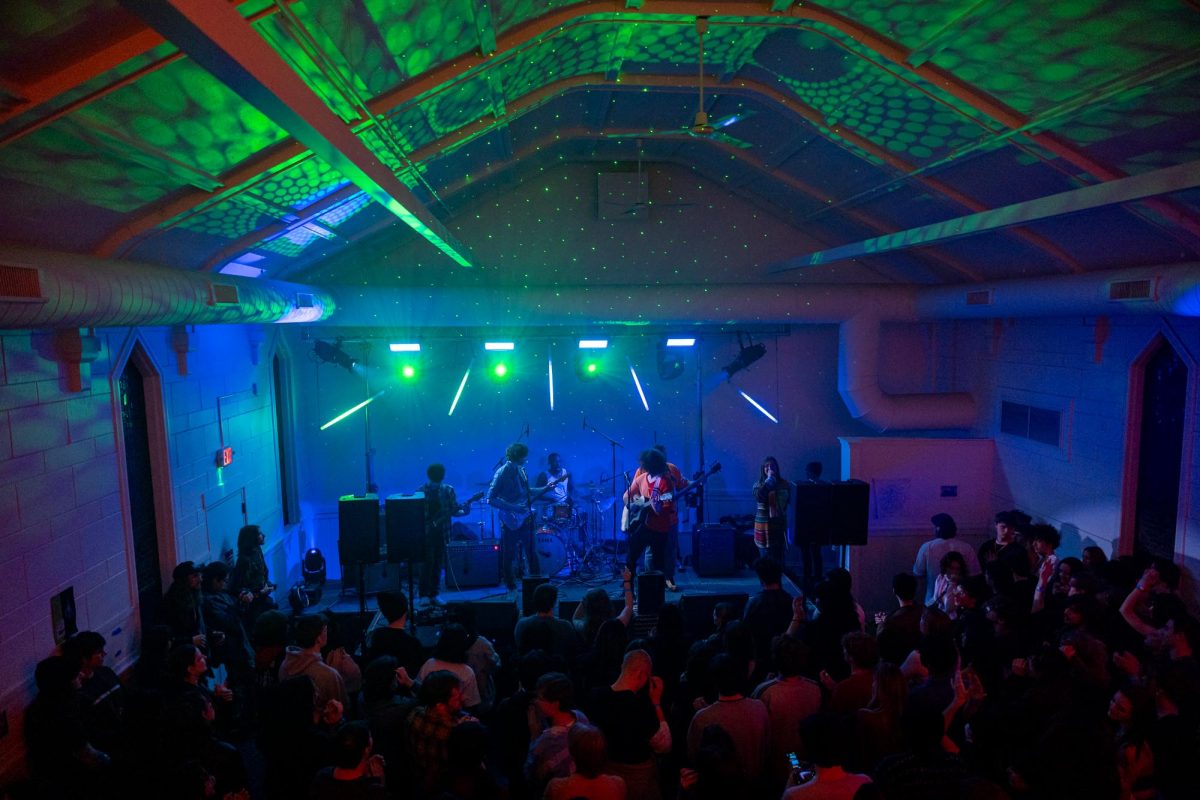
Oakland musicians and residents are feeling a loss in the neighborhood’s music scene following Haven’s recent temporary closure.
On Feb. 4, Haven, an independent music venue in Oakland run by Post Genre, announced it would suspend all events for the foreseeable future after having received a stop-work order from the City of Pittsburgh Department of Permits, Licenses, and Inspections.
According to a statement posted on Haven’s Instagram, the venue had been working with the Pittsburgh Innovation District, their landlord and the City of Pittsburgh for two years to obtain proper permitting. During that time, the venue had been granted permission to operate temporarily while working towards the required permits.
“Unexpectedly, we are no longer able to operate in the short term until everything is finalized,” the statement read. “We are awaiting more information regarding what this timeline looks like, but there are a lot of moving parts and much uncertainty as to when this can reasonably be completed.”
For Jack Bender, a junior mechanical engineering major and volunteer lighting technician for Haven, the venue’s temporary closure left him with feelings of “emptiness” and “confusion.”
“It feels like a very important pillar of the community that was getting built, and really starting to gain traction, got cut off very quickly,” Bender said.
According to Bender, the venue does not expect to reopen during the spring semester, though a specific timeline remains uncertain. Bender also said staff members learned about the order one to two days before the Haven Instagram account posted the announcement.
“We were fully ready and intending to have shows that weekend,” he said. “We were fairly confused as to why our situation changed from before.”
Malcolm Rooney, a member of the Pittsburgh-based band Mister Doctor who has been involved in Oakland’s music scene for the past five years, said he has witnessed firsthand the neighborhood’s “DIY” music landscape change. Rooney lived in Black Lodge, a now-closed “house show” venue in Oakland.
“There used to be a ton of music venues here,” Rooney said, naming Black Lodge, The Deli and West Egg as a few of the more notable spaces. “They slowly just whittled away.”
Rooney views Haven as a continuation of those legacies.
“I see Haven as a blossom of what Black Lodge was, and not just Black Lodge, but the entire scene we built,” Rooney said.
Rooney performed at Haven with three different bands — Funky Lamp, Z-Nemo and the Big Slime and his own band, MRDR. Concerts at Haven are particularly memorable for him.
“It was the most fun I’ve ever had on stage,” he said. “The lighting, the sound, the people. Some of the best weekends I’ve ever had in my life I’ve had at Haven.”
Mark Bluemle, an Oakland resident who DJs under the name DiscoNap, started performing at bars and house parties in Brooklyn before moving to Pittsburgh in August. For Bluemle, Haven changed how he saw himself as an artist.
“Haven opened the doors for me to even become an artist,” Bluemle said. “I never saw myself going on stage every week, but the crowd was just so amazing it made me want to come back.”
For Bluemle, the energy at Haven feels different from many Brooklyn venues, saying it felt less competitive and more communal.
“I love building community, especially within my LGBTQ+ folks, and Haven feels like one of the few places where you can truly be yourself,” he said.
Rooney emphasized that Haven helps emerging artists trying to break into Pittsburgh’s music scene, adding that this is partly due to Haven’s easy booking process. Rooney said Haven’s booking process is similar to Black Lodge’s, in which bands would “hit him up” asking for performance openings on the same day.
“Haven is a spot where smaller artists got a shot — a spotlight on them,” Rooney said.
For Bender, Haven’s temporary closure has left a noticeable gap in Oakland’s nightlife, a neighborhood he believes is largely made up of bars and restaurants.
“The only thing I can really do in Oakland now on the weekends is go to a bar, but I don’t find that very fun,” Bender said.
Bender said Haven offered students under 21 — and anyone uninterested in bar culture — a space to gather that didn’t revolve around alcohol.
“A lot of music venues in general across Pittsburgh are 21 plus for their events because they have a bar,” Bender said. “The existence of sober space music venues is really important.”
Bender also pointed to Haven’s affordability and convenience. Tickets cost $10 with a student discount, and its location in Oakland allows students to walk rather than take a bus to other venues in the city.
“[I think] it is the only cool, walkable, accessible thing in Oakland for a lot of people that wasn’t just hanging around in someone’s house,” Bender said.
Claire Donnellan, a senior marketing and communications major, said she sees Haven as a third space for artists and community members.
“[They] aren’t just venue owners, [but] curators who want to see the local scene thrive,” Donnellan said. “It is built by a passionate group of people who recognized a gap and decided to fill it themselves rather than waiting for a big developer to do it.”
Having witnessed Haven’s growth since its inception, Donnellan said Haven’s temporary closure is a loss beyond just the venue itself.
“It’s not just about ticket sales — it’s about accessibility, inclusivity and people who love music,” she said. “It’s all just pure joy, and that’s what Haven radiated.”