

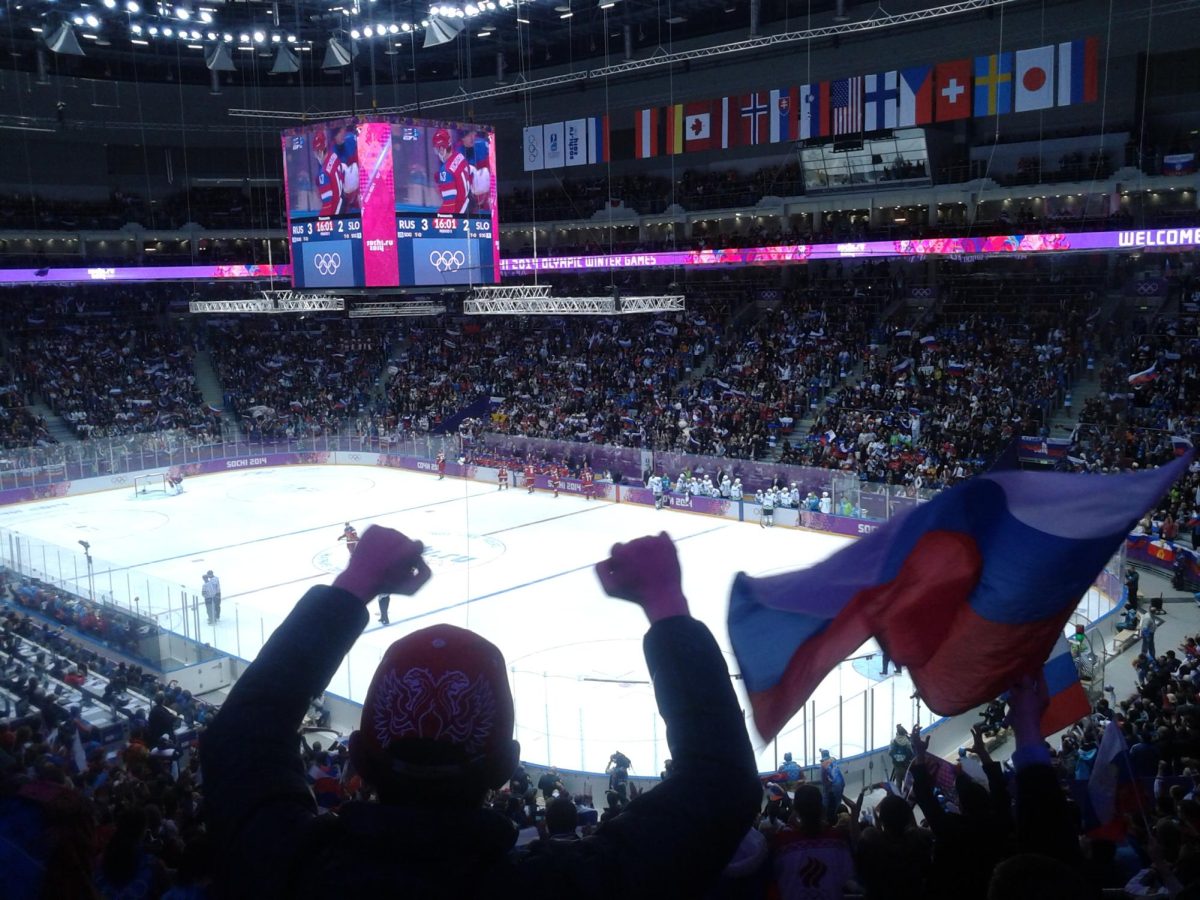
On Sunday, the preliminary round in men’s hockey at the Olympic Winter Games in Milan, Italy, came to a close.
This is the first Winter Olympics since the 2014 Games in Sochi, Russia, that features National Hockey League talent, setting up a true best-on-best on the world stage. For Team USA, that means the Olympic debut of American stars like captain Auston Matthews, brothers Matthew and Brady Tkachuk, Quinn Hughes and many others.
With the surplus of talent at the Americans’ disposal this year, Team USA swept its group, beating Latvia, Denmark and Germany to earn a bye in the knockout rounds. It will play the winner of Sweden vs. Latvia.
While we await its next game, here are three takeaways we’ve learned about the American team after watching it for three games.
America’s net still belongs to Connor Hellebuyck
There was serious argument over whether Team USA brought their best 13 forwards and seven defensemen, but one area we could all pretty much agree on was the goaltending trio of Connor Hellebuyck, Jeremy Swayman and Jake Oettinger. The only question was about their order on the depth chart.
Hellebuyck — however fair to him — has a reputation of not winning in the biggest moments. Back home in the NHL with Winnipeg, his save percentage falls from .917 in the regular season to .903 in the playoffs. Only once have the Jets made it past the second round with him in the net.
That bad rap really picked up steam last season, when, after winning the Vezina, Jennings, and Hart Trophies en route to leading the NHL with 43 wins, eight shutouts, and a 2.00 goals against average, he collapsed in the postseason. In 13 playoff games, Hellebuyck’s save percentage plummeted 59 points to an abysmal .866, and the Jets were bounced in the second round.
Hellebuyck was also in the net for the Americans during the NHL’s 4 Nations Face-Off tournament, seeing the puck go just past him in overtime of the championship game against Canada.
But, given his career accolades, Hellebuyck was in pole position to open the tournament, getting the net as Team USA played Latvia in their first game. To his credit, Hellebuyck made 17 saves on 18 shots in a 5-1 win for Team USA.
Given the Americans had a back-to-back on Saturday and Sunday, head coach Mike Sullivan gave second-string goalie Jeremy Swayman the start against Team Denmark on Valentine’s Day. Swayman, in the midst of a bounce-back year with the Boston Bruins, had a chance to create a goaltending controversy ahead of the knockout games. But in his start against the Danes, Swayman surrendered three goals on 21 shots, including one from the neutral zone that any goaltender needs to turn away. Though the Americans eventually won 6-3, it wasn’t the best of performances for Swayman.
Sullivan and Team USA went back to Hellebuyck for their third and final preliminary game against Germany, arguably their toughest competition of the round robin and a game that decided who won Group C. He rewarded them with a 23-save performance in a 5-1 win against the Germans.
It’s still Hellebuyck’s net.
Team USA needs to pick up the pace in games
The final score of each game Team USA has played so far has looked rather convincing, winning by at least three goals in each preliminary game. But they haven’t always started games strongly during this tournament.
The Americans needed the entire first period to fully warm up against Latvia. Even though Brady Tkachuk ripped one past the Latvian netminder five and a half minutes into the game, the Americans gave that goal right back less than two minutes later. They looked slow and groggy to open that game, heading into the first intermission tied 1-1. Their start led to some concern that perhaps Team USA general manager Bill Guerin made some mistakes in constructing his roster.
In their Saturday matchup versus Denmark, it was the Danish team that shocked the Americans by scoring two goals in the opening frame and going into the first intermission up 2-1 over the U.S. That was in part due to the aforementioned neutral-zone goal allowed by Swayman, but the Americans had a hard time picking up their play after that goal. They looked stunned from how hard the Danes were playing in that first 20.
They had a better start in their final preliminary game against Germany. Icing a lineup that included Leon Draisaitl, Tim Stützle and JJ Peterka, the Germans were held scoreless in the first period while Team USA was able to sneak one past in the dying seconds. Then, just like against Latvia and Denmark, the American attack started to heat up in the second period. The U.S. tacked on two more goals in the second and an additional pair in the third, cruising to a 5-1 win over Germany. The Germans didn’t get their one and only goal until midway through the third.
Through the preliminary games, Team USA was able to make up for slow starts simply because it had the better roster. Should the U.S. play Canada — the only other team to sweep the preliminaries — or even a country like Sweden at some point during this tournament, it won’t have nearly as much time to wake up during the game.
The start against Germany is something Team USA needs to build off of.
The Americans want to play a physical game
Though the preliminary round didn’t feature some of the fireworks that 4 Nations did during their opening games, Team USA has shown over the first three games that it wants to play a physical style. We’ve seen several members of the team push their way to the front of the net after the whistle, garnering attention from opponents and a shoving match near the blue paint.
This style has come from several different players. The Tkachuk brothers have played key roles in throwing the body around during preliminaries. Brady, in particular, tried to take on several members of the Danish team after the first period on Saturday. With his team down 2-1 heading into the break, Brady was trying to spark some life into his team and get the boys going. It worked.
International hockey — whether Olympic or otherwise — rarely features the level of physicality that NHL hockey does. But in a tournament that features NHLers for the first time in 12 years, more of the North American style of the game is taking place on Olympic ice.
It’s a kind of style that the Americans will need to continue to have ready as competition ramps up. Team Canada, for example, brought several players who are notoriously known for their physical style of play. Canadian winger Tom Wilson dropped the gloves in his team’s matchup against France on Sunday, which — per Olympic rules — comes with an automatic ejection.
But several other teams with NHL talent, like the Swedes, are no pushovers either. As the talent gap closes or even flips away from American favor, winning at the games might come down to who can dictate play and win the intangibles like physicality. The Americans have a roster that says they’re willing to play a more checking-style game if needed.