

Fear of immigration enforcement in the Pitt community is on the rise, and Pitt’s unions are looking to respond at the bargaining table.
The graduate student union proposed a memorandum of understanding on Jan. 30 to keep law enforcement agents out of private work spaces, including classrooms and laboratories, and asked the University to denote these spaces. The staff union and faculty union each put forward similar proposals in mid-February.
All three unions are planning to meet with the University to bargain before the end of March.
Members of the graduate student union believe their proposal addresses an urgent issue, according to Lauren Wewer, chair of the graduate bargaining committee and fourth-year mechanical engineering and materials science graduate student. She said the University has a “responsibility to stand up for their workers.”
“[International graduate student workers] make up a significant portion of our bargaining unit, and it’s really important to all of us that they remain safe at their jobs, that they feel comfortable even coming to campus,” Wewer said.
According to Wewer, the graduate student union ran a Valentine’s Day email campaign in February to prompt a response from the University. Wewer said “hundreds” of students, grad workers and members of the community sent emails to the Office of the Chancellor and Office of the Provost demanding answers about their ICE policy and guidelines for graduate student safety.
“Currently, it’s quite vague what happens,” Wewer said. “After that, we did not get a response to any of these hundreds of emails.”
University spokesperson Jared Stonesifer referred to guidance from the Office of Public Safety and Emergency Management for potential ICE visits to campus. It states that students should contact the Pitt Police and the Office of University Counsel for advice to proceed, among other steps.
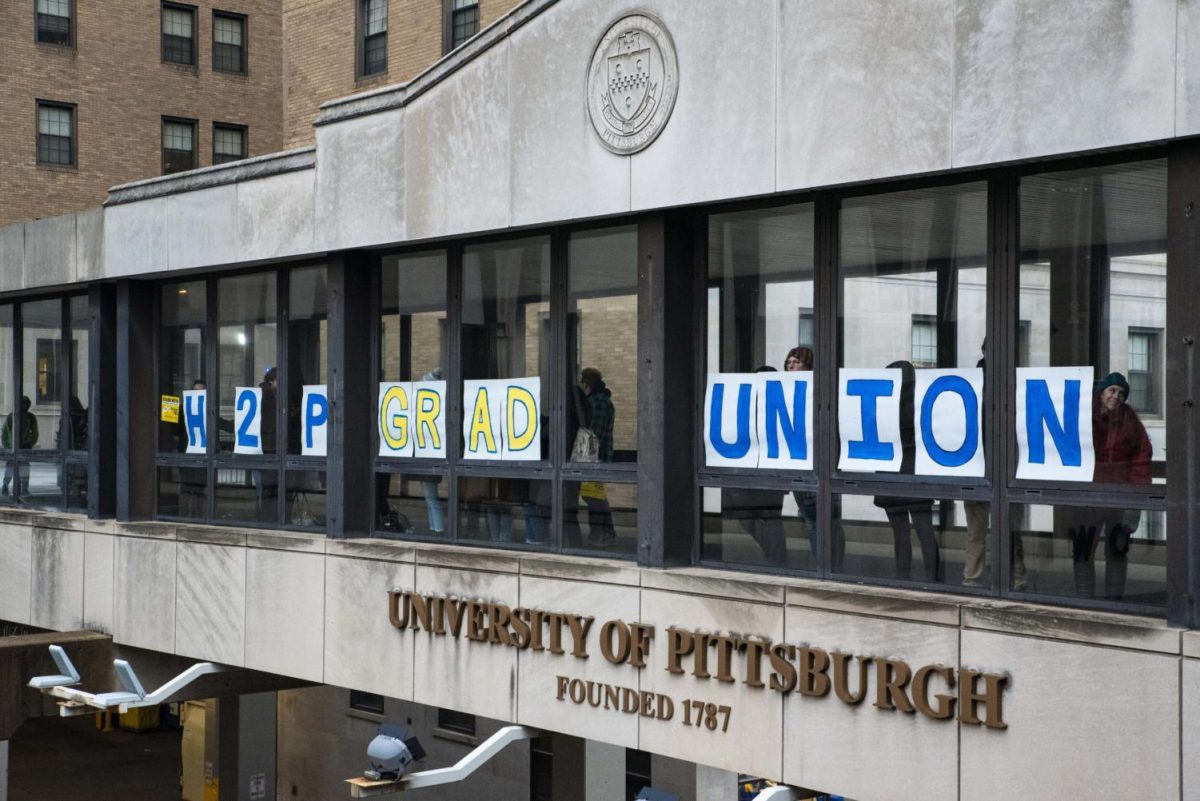
The graduate student union also rallied on Feb. 17 outside the Chancellor’s office in the Cathedral of Learning. According to Wewer, Gabel did not speak with the graduate students.
As of Feb. 27, the University has not responded to the graduate student union’s proposal, according to Wewer.
“I think these are just very common-sense protections in the workplace to keep everyone safe, make sure everyone’s rights are being upheld,” Wewer said. “I really hope that Pitt and the administration can see that and that we can actually work together to try and keep all of our workers safe.”
Stonesifer said the University is working “in good faith” to bargain these proposals with the unions.
“Any updates we have in the bargaining process, including the University’s proposals and counterproposals, are posted to the respective websites,” Stonesifer said.
A staff member in the Dietrich School of Arts and Sciences, bargaining unit member and legal permanent resident who wished to remain anonymous due to safety concerns, said she has become more fearful of immigration enforcement since Trump took office. She said the University’s lack of communication about ICE has made her feel “exposed.”
“I don’t know how much [Pitt] can promise, but saying something, having a stance — Columbia University just did it,” she said. “[Columbia was] very clear — in no uncertain terms — that they were not pleased with [the false pretenses an ICE agent used to enter a University residence], and they [defended] their international community.”
She said the University’s response to the staff union proposal was “disappointing.” She sympathizes with the University’s dependence on the federal government for research funding, but still sees ways they could improve communication with the community.
“I know [Pitt] has to walk the line, the balance, but it’s upsetting,” she said. “They could have internal communication to make us feel better. They don’t have to make a big deal, public news, necessarily. They can be more proactive and quick to respond to our MOU or the students’ MOU.”