

The internet’s latest “framemogging” obsession has taken the world by storm — though Pitt students aren’t as interested.
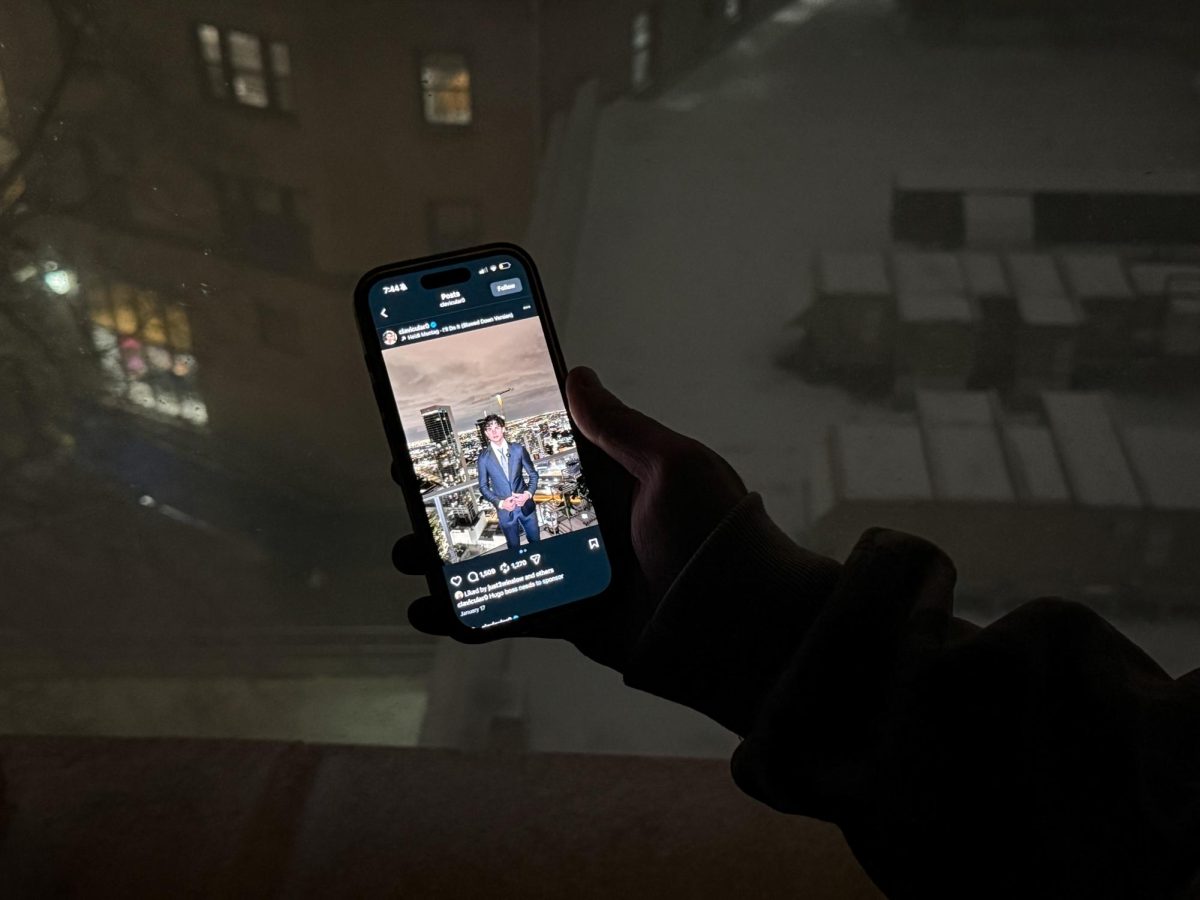
Braden Peters, the streamer colloquially known as Clavicular, is part of the most recent fixation of beauty-obsessed male influencers. The influencer’s fixation on “looksmaxxing,” or creating a more physically attractive version of himself, speaks to a larger trend towards hypermasculinity that’s shown up in recent fashion weeks, masculinity-heavy “For You” pages and even foreign policy initiatives.
Clavicular’s entire persona is built on looks. He goes to extreme lengths to look better than his peers, including claiming he smashes his face with a hammer to have a sharper bone structure, injects testosterone to the point of infertility and smokes methamphetamines to eat less.
While his colloquialisms and sacrificial beauty treatments have mystified many, some Pitt men said they aren’t buying into it. Andrew Nowakowski, a first-year on the pre-med track, said Clavicular is “obviously a loser.”
“He lives in a world where the only thing that matters to him is this sort of attractiveness philosophy,” Nowakowski said.
Nowakowski was familiar with some of the terms Clavicular uses — such as “bonesmashing” — from Twitter, but was surprised to see the influencer actually has an audience. Nowakowski wondered what the “end goal” of looksmaxxing is and suggested Clavicular is still insecure, even while prioritizing his looks above others.
“What’s the point if it’s not to feel good about yourself or it’s not to attract other people?” Nowakowski said. “Is it to put other people down?”
Miles Hartlage, a sophomore civil engineering major, said Clavicular is a “little bit weird” and takes attractiveness to an extreme. He understands wanting to feel good about oneself but sees bonesmashing and taking steroids as going beyond just looking good.
“[Clavicular] said something like, ‘don’t pay for college, just get surgery.’” Hartlage said. “So it’s definitely a very extreme end of, ‘all you need to do is just look good to be successful.’ It kind of seems like a bad influence if people are actually paying attention to him.”
Adriano Sotomayor, a senior dental hygiene major, said Clavicular is “irrelevant” to his life. But Sotomayor has noticed the growing focus on hypermasculinity online and in gym culture since high school. Sotomayor said the push towards hypermasculinity negatively affects many people because of the unrealistic physiques many influencers portray.
“These people literally look like Superman or like Batman,” Sotomayor said. “That’s just not the reality for most. Most men don’t work out, and the men that do work out — it’s not even close to looking like that.”
A hyperfocus on bodies and masculinity is not a new cultural obsession, according to Sreyashi Mukherjee, teaching assistant professor of strategic communication. Though social media has brought more attention to people’s physical image, the idealization and focus on bodies have been around for centuries, Mukherjee said.
“This has been happening for millennia at this point, right? Whether that looks like having your little Greek god sculpture or whether it looks like producing magazine-worthy bodies,” Mukherjee said.
Idealized masculine bodies are typically muscular and healthy-appearing, but the ideal body type and accepted figure have fluctuated — especially throughout the last century. Mukherjee said a focus on bodies is not a new fixation, especially considering the cultural embrace of body positivity in previous years.
“The early 2010s had this uprise in more inclusivity for your body and what that looks like,” Mukherjee said. “Body inclusivity became a hashtag or became a thing that we all considered in ways that we had not previously.”
The hypermasculinity portrayed by Clavicular tends to uplift idealized white features rather than culturally diverse ones. Mukherjee reported seeing videos of the influencer idealizing white, blonde-haired and blue-eyed women — which are historically components of the racist “Aryan race” ideology. At the same time, Clavicular has said Black women are “not even a little bit” of his type, and has reportedly used the N-word on more than one occasion.
Mukherjee said this idealization of Western beauty standards can have a dangerous impression, such as promoting the use of harmful bleaching chemicals.
“It’s not just harmful and hurtful for the U.S. specifically, but because of the ease of social media and how information travels, this is globally hurtful for a lot of people in very many different ways,” Mukherjee said.
Mukherjee brought the subject of Clavicular to her students this semester, who giggled at the topic and took it as “unserious business.” She believes the larger student population agrees with this standpoint, even though she’s noticed variations of hypermasculinity on campus through sports and Greek life.
Mukherjee is hopeful students will think critically when confronted with hypermasculine influences.
“I think [male college students are] looking at this from an exterior lens inwards, where they’re like, ‘Cool. We hear what [Clavicular is] saying, but haha, that jokes on you’ kind of a thing. I don’t think anyone seems to be taken by it, where they were trying to enact upon this, and I appreciate that,” Mukherjee says.
Sotomayor hears his younger cousins using terms like “looksmaxxing” and said he is concerned how younger people might base their behaviors off of figures like Clavicular, considering his own past. When seeing muscular-looking people on social media, Sotomayor felt pressure to start dieting at 16.
“That would be like, my biggest worry with my cousins and my family members that are currently in that situation,” Sotomayor said.
Nowakowski said the beauty standards Clavicular is pushing can be “harmful” towards young men — especially when looking at the PSL scale from the looksmaxxing community, which measures things like “angularity” to compile an attractiveness score.
“You’re giving these young men an outlet where it’s like, compare your face to this chart and find out that you’re ugly,” Nowakowski said. “If you were trying to give somebody body dysmorphia as quickly as possible, that’s probably how I would do it.”