

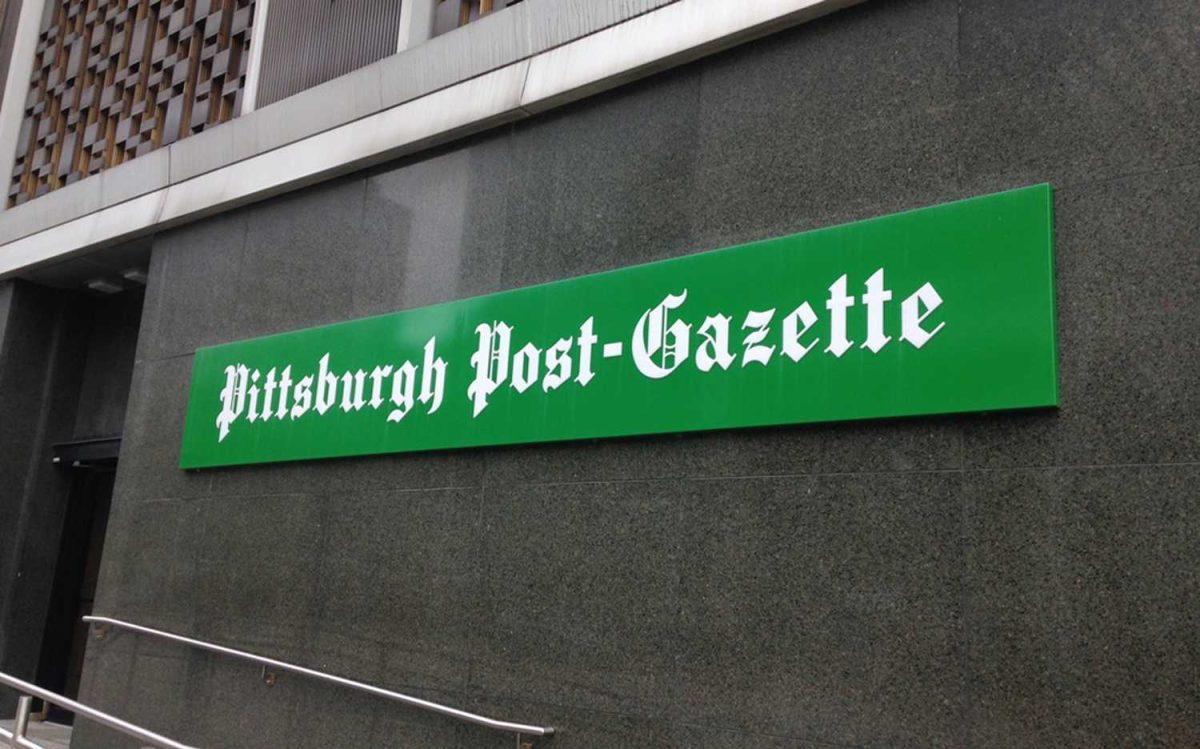
On Jan. 7, the president of Block Communications Jodi Miehls informed the staff of the Pittsburgh Post-Gazette through a pre-recorded Zoom call that the paper will cease operations on May 3. The Post-Gazette has roots dating back to 1786, but after May 3, it will no longer exist.
This news comes only days after the closing of the Pittsburgh City Paper, also owned by Block Communications. The Pittsburgh City Paper was in print for over three decades.
The Post-Gazette was the battleground for a three-year strike by unionized staff members over contract disagreements between the Newspaper Guild and PG Publishing. This strike ended in November when the U.S. 3rd Circuit Court of Appeals ruled in favor of the union members, stating that PG Publishing had bargained in bad faith. On Dec. 22, Justice Samuel Alito ordered a pause on the appeals court’s order. However, the U.S. Supreme Court vacated this pause and refused to freeze the 3rd circuit court’s decision after PG Publishing’s petition for review.
Hours later, the Post-Gazette was history.
Block Communications also cited a $350 million loss over the past 20 years from the Post-Gazette and a fading local news economy as motivation for the closure. It is impossible to deny that many factors were at play for the death of Pittsburgh’s oldest paper.
As residents of Pittsburgh and young journalists inheriting the industry, it is a blow to watch this institution crumble. Local news is key to community engagement, to staying informed and to the history and culture of a city. It is where you can go to learn about a particularly inspiring neighbor or an eye-opening new art exhibit as well as an unbiased source of harder news, both near and far.
Suddenly, this resource feels expendable. Suddenly, it is an inconvenient growth that can be cleaved by the wealthy few in charge rather than an effort for the people, by the people. But this cannot be our takeaway.
The strikes worked, in a sense. The courts ruled in favor of the union, and it was only through the closure of a centuries-old paper that Block Communications escaped finally needing to treat their workers fairly. They escaped by the skin of their teeth, but this won’t always be the case. We must continue to challenge those that think money can defy much stronger stuff. We must prove that we care so much for these institutions that they cannot possibly be destroyed or shuttered away under the pretense of decreased public interest.
We need newspapers and journalism more than ever, with misinformation and disinformation on the rise and political unrest growing. Stop getting all your information from random Instagram infographics and three-second videos that don’t tell the whole story. Replace your morning social media scroll with a scroll through a local paper. Read an entire article written by a real, breathing person, and tell your friends to do the same. Then read another, from a different paper. Then another.
This is the only way we can preserve some semblance of ethical responsibility to tell the truth, the only way we can protect our legacies and stay connected to our communities. This is bigger than one newspaper in one city. Do not roll over and let a couple hundred people with billions of dollars take everything from you.
The Pitt News editorial is a weekly article written by the opinion editors in collaboration with other desk editors. It reflects the collective opinion of the current Pitt News editorial staff.