

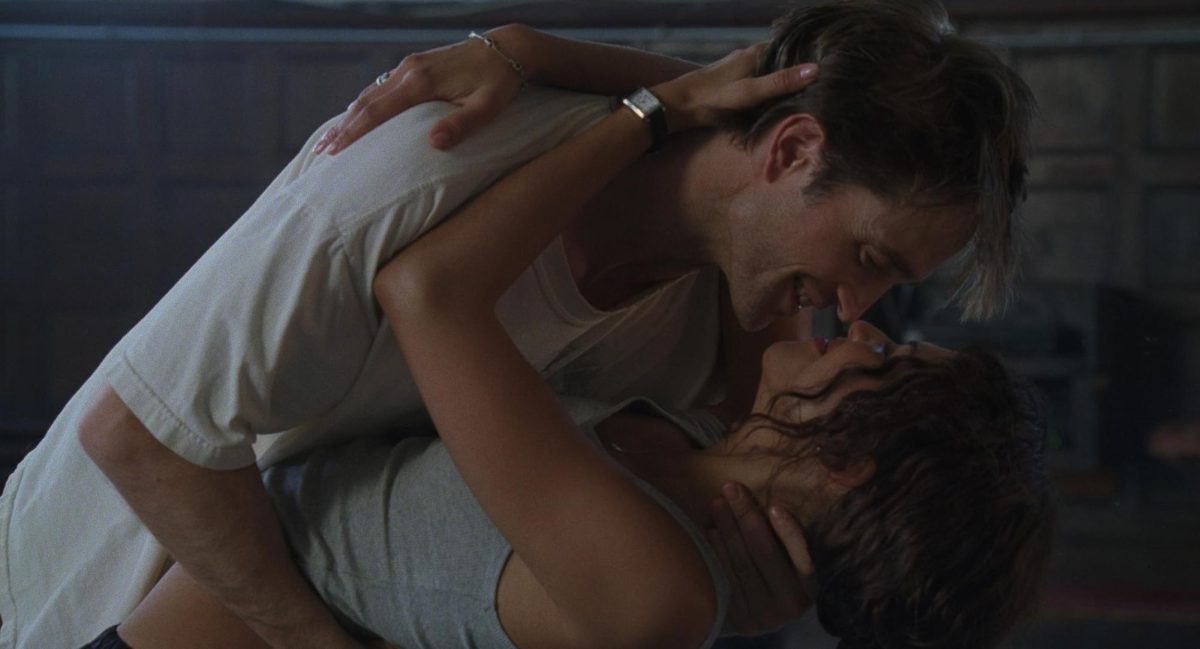
A24’s “The Drama” is one of the most talked about releases of 2026, and all the excitement began with the film’s marketing campaign. The campaign started with an engagement announcement printed in The Boston Globe in December. This announcement framed the engagement between Charlie Thompson (Robert Pattinson) and Emma Harwood (Zendaya) as a real-life event, rather than part of the film.
From there, A24 continued using wedding material to promote the film by dropping a wedding website for Emma and Charlie. The site appears to be authentic, filled with photos of the pair posing as a couple and even suggestions for what to wear to the wedding. However, the website notably features a link to purchase tickets for “The Drama.”
Other promotional material include the temporary opening of a wedding chapel in Las Vegas and having Zendaya give a dress to a bride-to-be. Zendaya’s press tour styling also fit the theme. She cycled through looks that followed “something old, something new, something borrowed and something blue.” All together, this campaign presents the film as a glitzy wedding feature.
*Spoilers for “The Drama” ahead*
However, the film itself isn’t just about a wedding. Rather, it uses the wedding to explore a much darker topic — gun violence. The key twist comes early in the film as Emma and Charlie, along with two of their friends, discuss the worst things they’ve ever done. Emma, in a drunken stupor, reveals that she planned a school shooting but never executed it. The rest of the film follows the fallout from this revelation, as everyone tries to reckon with their shifting perspectives.
As the film progresses, we learn that young Emma (Jordyn Curet) was indoctrinated into gun culture via the internet as a lonely teenager. She learned to idealize violence and romanticize guns. After a shooting occurs near her hometown, young Emma comes to understand the magnitude of it and becomes an advocate for gun control, actively working to prevent the violence she was once ready to create.
This backstory allows for the film to serve as a commentary on American gun culture, as well as the internet and its ability to radicalize its users. Emma’s romanticization of violence is borne out of loneliness. The first place she finds solace is a violent corner of the internet. It explicitly engages with the isolation of the digital era and wide access to media and information.
The marketing surrounding this film is genius, as it utilizes social media to propel itself forward. It’s much less insidious than the content Emma was encountering but similarly mirrors the power of the internet to spread a message. It is not masking the importance of the subject matter in the film, as some groups like March for Our Lives have argued.
Instead, it primes the audience for the twist and then handles the subject matter with great care and consideration.
Furthermore, the promotion of “The Drama” does not reveal its twist — the viewer is also forced to confront what they would do upon discovering this about someone they love. They must work through the ethical questions of the film in real time with the characters.
While on the surface the film’s marketing may seem incongruous with its content, it feeds into it in actuality. The promo does not subtract from the film’s message, but rather adds to the twist and its intense revelation and social commentary.
Lauren is a senior studying English literature, communications and film. You can connect with her at [email protected].